


There’s no better way to experience a landscape than to hike through it. Climbing can be more intimate, and you can cover more ground on a bike, but hiking goes deeper than that. It’s all about syncing your natural rhythm to the pace of the world around; the steady forward progress that’s perfectly timed to the footsteps of wildlife, the song of the birds, and the breath of the wind. Walking allows you to take it all in.
The best thing about hiking, though, is its accessibility, both personally and geographically. You don’t need technical skills to walk, and you can go on a great hike almost anywhere in the world. Having said that, there are treks that go beyond a stroll in the park and become truly life-affirming experiences. The six that we’ve chosen here offer scenery at its grandest, satisfying amounts of challenge, and the chance to connect with nature that’s still raw and wild.
Each can be done by intermediate to strong hikers who have experience on rugged terrain, but they’re not backcountry expeditions that require months of forward planning. They can be completed in as little as four days, or you can spend up to a month on the trail, so whether you can only manage a week’s holiday or spare a bit more time, there’s no excuse. Get inspired below and then get out there.
Tour du Mont Blanc, the Alps

Few treks offer the sheer variety, accessibility, and visual drama of the Tour du Mont Blanc. The 170km route delivers a different alpine scene every day, from glacier views and cowbell meadows to rifugios serving red wine with mountain pasta.
It’s the definitive European trekking experience: well-marked trails, charming mountain villages, and the thrill of walking across national borders with your boots on. It’s a physically demanding route with steep climbs and long days, but its popularity, infrastructure, and support options make it one of the most accessible big treks in the Alps.
THE TREK
The full circuit usually takes between nine and 12 days to hike, depending on route choices, pace, and how many cable cars or shortcuts you take. The traditional start point is Les Houches near Chamonix, but the loop can begin anywhere.
Wherever you start, the route gains over 10,000m of elevation as it winds its way through the Mont Blanc Massif. Highlights include the Grand Balcon Sud trail above the Chamonix Valley, the Grand Col Ferret crossing into Switzerland, and the descent into Courmayeur with views of Mont Blanc’s southern flanks. Every few hours, the scenery changes. One moment you’re beneath glaciers, the next you’re crossing wildflower meadows with views of jagged peaks.
It’s non-technical but physically demanding, with several long days and steep ascents. Most trekkers stay in a mix of refuges, auberges, and small alpine hotels, making it one of the most comfortable multi-day treks on this list. With multiple access points and baggage transfer services available, there’s a lot of flexibility when it comes to planning your hike.
HOW TO DO IT
For a self-guided take on the Tour du Mont Blanc, Alpenventures UNGUIDED offers a setup that balances independence with thoughtful support. You choose the pace, but you’re never on your own: expect detailed navigation tools, handpicked accommodation, and the option of luggage transfers if you’d rather not carry it all.
Alpenventures UNGUIDED has refined their itineraries to get the best out of the trail, whether that means finding private rooms, avoiding bottlenecks, or stretching the route slightly to include a rest day in Courmayeur. It’s still a big undertaking, with long days and tough ascents, but their support behind the scenes means you can focus on the trail, not the logistics. Click here for more information.
Huayhuash Circuit, Peru
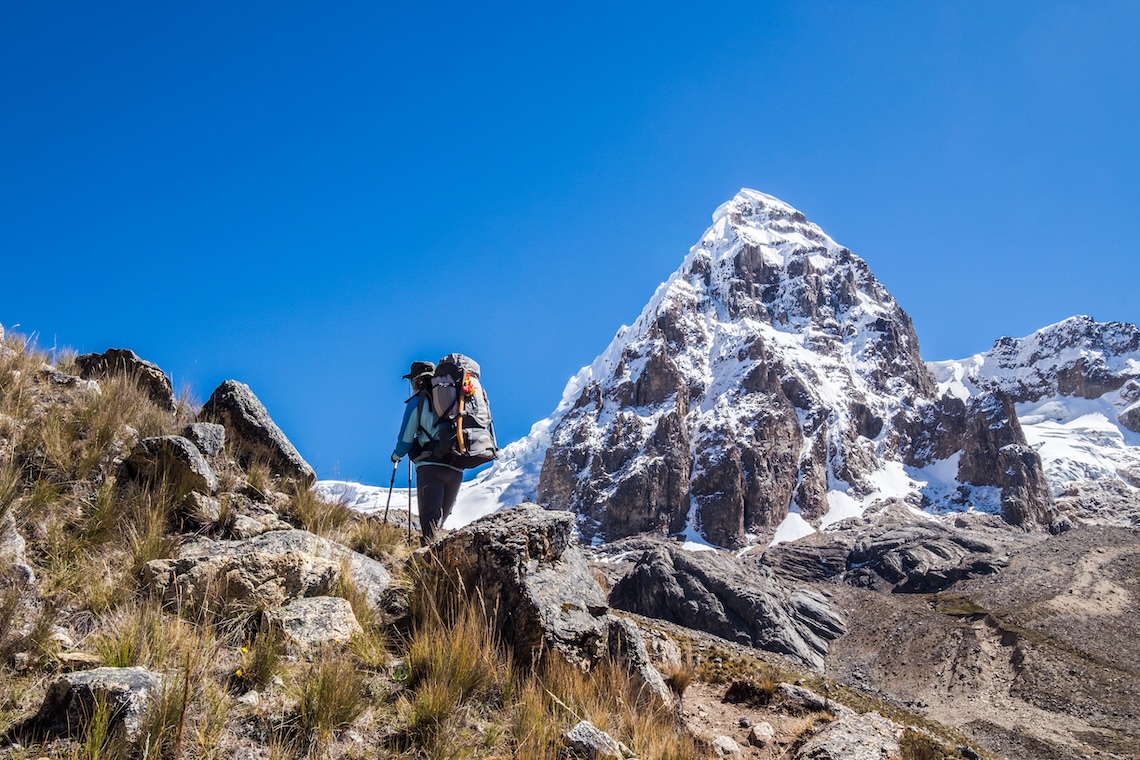
The Cordillera Huayhuash isn’t just one of the most scenic treks in South America, it’s one of the most spectacular anywhere on Earth. High in the Peruvian Andes, south of the better-known Cordillera Blanca, this trail leads through a remote world of towering mountains, turquoise lakes, and valleys that feel lost in time.
This is a route for those who want to disconnect completely, hike far from crowds, and earn their views. There are no roads in, no easy outs, and that’s the point. The reward? Close-up views of knife-edge ridgelines, glacial cirques, and iconic peaks like Yerupajá (6,617m), the second-highest mountain in Peru. It’s wild, it’s tough, and it’s unforgettable.
THE TREK
The Huayhuash Circuit is typically walked in 10-12 days, beginning from the village of Llamac and forming a loop through a remote corridor of high-altitude passes and valleys. You’ll camp near glacial lakes like Carhuacocha and Jahuacocha, hike beneath 6,000m peaks, and cross multiple passes over 4,500m, with the highest, Punta Cuyoc, reaching 5,000m.
One of the route’s highlights is the approach to Siula Grande Base Camp, the mountain made famous by Joe Simpson’s survival story Touching the Void. Standing at 6,344m, its sheer west face and glacier-carved slopes form one of the trek’s most dramatic backdrops.
The terrain is rugged but never technical. Most trekkers complete the route with the support of local guides, cooks, and pack animals, which makes the experience more accessible without compromising its wilderness feel. Each day, you’ll wake up to views few others get to see, and sleep under some of the clearest night skies on Earth.
HOW TO DO IT
For a supported trek that gets deep into the wilds without losing comfort or cultural insight, KE Adventure runs a 16-day Corillera Huayhuash expedition with a carefully selected route, high-altitude camps, and an expert local crew. Led in the field by experienced Peruvian guides and organised by Val Pitkethly, KE’s Andean specialist, the route focuses on wild valleys, ridgeline camps, and panoramic passes.
The itinerary includes time to adjust to the altitude, with three nights at lower elevations before the trek begins and a rest day midway through the circuit. Expect long days, big passes, and expert logistical support that allows you to focus on the challenge, not the chores. For full details of KE Adventure’s Cordillera Huayhuash expedition, visit their website here.
W Trek, Chile
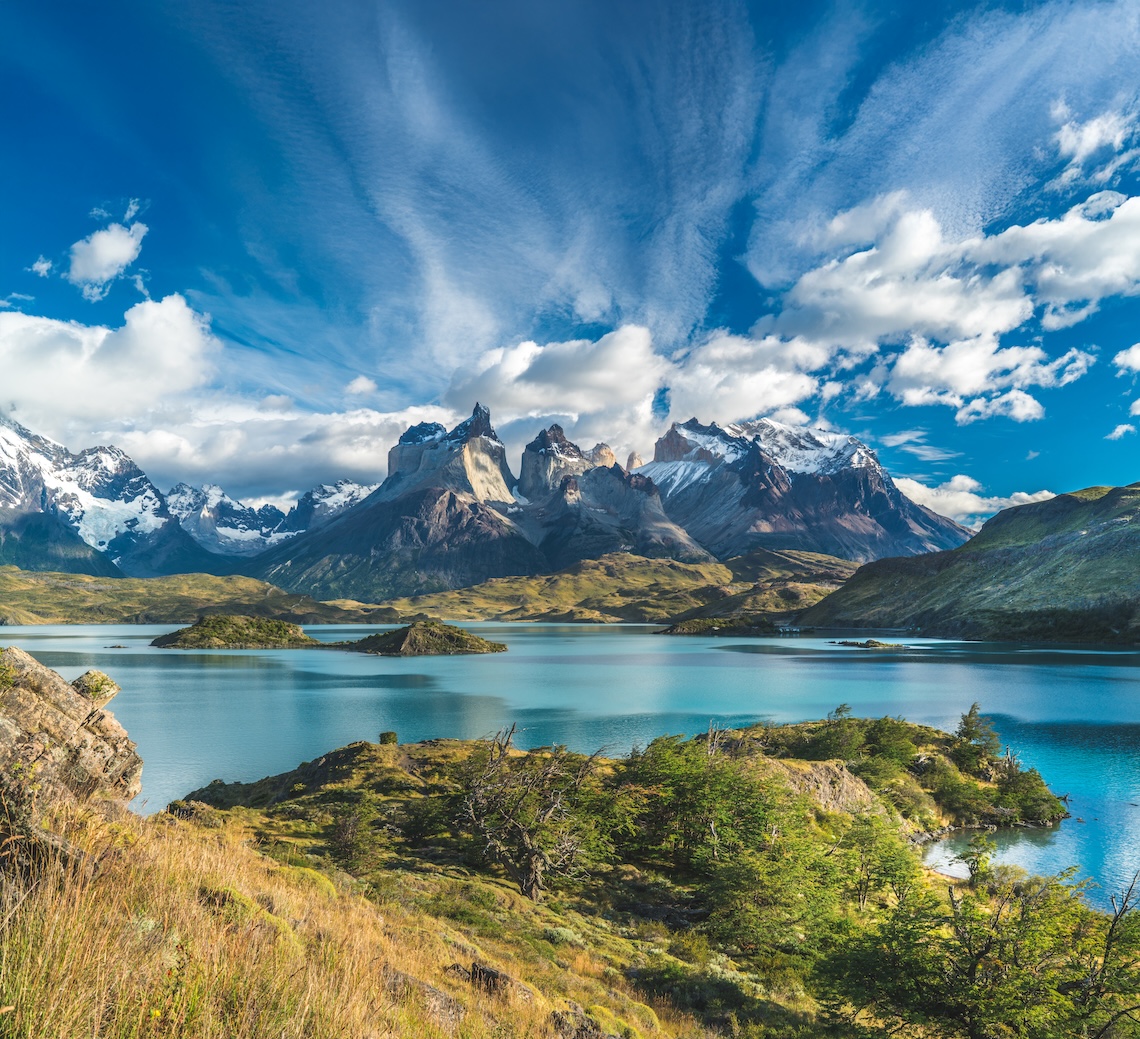
The W Trek in Torres del Paine National Park delivers drama at every turn, from the sharp granite towers and sweeping pampas (vast, fertile plains) to the slow, steady flow of ancient glaciers under vast southern skies. This trail’s ‘W’ shape on a map mirrors the region’s wild terrain, tracing three major valleys that each reveal a different delight of this legendary landscape.
The route links some of the park’s most iconic highlights: the jagged towers of Mirador Base Torres, the hanging glaciers of the French Valley, and the surreal blue mass of Glacier Grey. The weather here can shift from sunshine to sideways sleet in minutes, but that’s part of the appeal. This is a trail for those who want to experience nature at its raw and elemental best.
THE TREK
Most W Trek itineraries begin with a bus ride from Puerto Natales into the park, followed by an optional catamaran across Lake Pehoé. From there, the trail winds through forests, along the shores of electric blue lakes, and climbs into glacier-carved valleys.
Each day brings a new highlight. The demanding ascent to Torres del Paine viewpoint delivers one of the most celebrated views in the world. The middle sections follows the French Valley, with views of hanging glaciers and serrated ridgelines. The final section leads north along Lake Grey, ending at a viewpoint above the sprawling icefield of Glacier Grey.
It’s a five-day journey covering around 60km, with nights spent in a mix of mountain refugios, lodges, or well-equipped campsites. While it’s not a high-altitude trek, the terrain is exposed and the weather notoriously unpredictable.
HOW TO DO IT
For a fully supported adventure with minimal hassle, Unu Raymi Expeditions offers a five-day W Trek itinerary combining expert guiding with the flexibility to stay in comfortable refugios or campsites along the way. Their bilingual guides lead you through each section of the W, helping you interpret the land’s geology, flora, and fauna, while ensuring you get the most from each viewpoint. Click here to find out more about Unu Raymi Expeditions.
Unu Raymi’s package includes all meals, park permits, logistics, and even gear rental. They’ll also arrange your pre-trek transfers from Puerto Natalas, making it easy to step into Patagonia’s most iconic landscape. For full details and availability, click here.
Tavn Bogd Nomad Trek, Mongolia
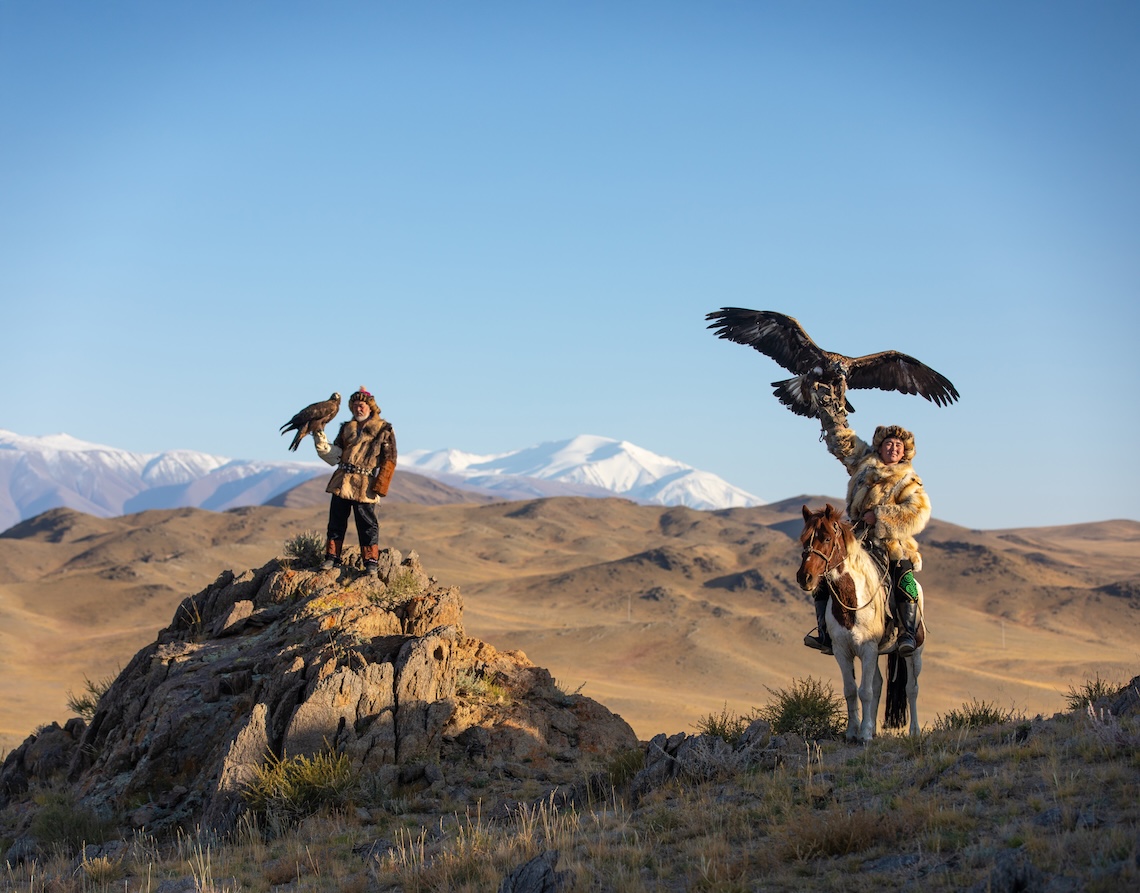
You won’t find well-worn paths or waymarked trails here. In the far west of Mongolia, the idea of a ‘trek’ is shaped by nomadic tradition, not guidebook definitions. Here, your route takes you across open steppe, alpine valleys, and glacier-fed rivers, led by experience, not signage.
Set in the shadows of the Tavn Bogd massif, this 11-day expedition takes you into a world where tents replace lodges, horses carry the load (and often you), and the only thing more striking than the scenery is the remoteness. You’ll follow in the hoofprints and footprints of the nomads, sharing meals and campsites with eagle hunters and herders who still live by the seasons.
It’s not a trek in the conventional sense, but it might just be one of the most unforgettable wilderness journeys you can take.
THE TREK
There are no markers, no switchbacks, no single line on the map. Instead, the route weaves through a living landscape, shaped by tradition, terrain, and the movements of the nomadic families who know these mountains best. Over 11 days, you’ll travel deep into Mongolia’s Altai Tavan Bogd National Park, alternating between hiking and horseback riding as the terrain demands.
From the alpine meadows of the Tsagaan Gol Valley to the ice-fringed edge of the Potanin Glacier, every day brings something different. Along the way, you’ll pass sacred mountains like Shiveet Khairkhan, stand before ancient deer stones and petroglyphs, and sleep under stars bright enough to read by.
You’ll hike with Bactrian camels carrying gear, camp in secluded river basins, and share camp stories with the Nomads whose way of life has remained unchanged for centuries.
HOW TO DO IT
Tusker Trail’s 16-day Mongolia expedition offers rare access to one of the most remote regions on Earth, led by local Kazakh nomads and supported by Tusker’s seasoned expedition team. You’ll hike and ride through the Altai with a small group, supported by pack camels, expert logistics, and mobile wilderness camps designed for comfort in wild terrain.
Tusker’s itinerary blends scenic variety with cultural depth. With no infrastructure around, the support team handles every detail, from delicious meals to seamless camp set up, so you can focus on the experience. If you’re looking for a journey that trades marked trails for wide-open horizons and tourist lodges for real connections, this one should be on your shortlist.
Kangchenjunga Base Camp, Nepal
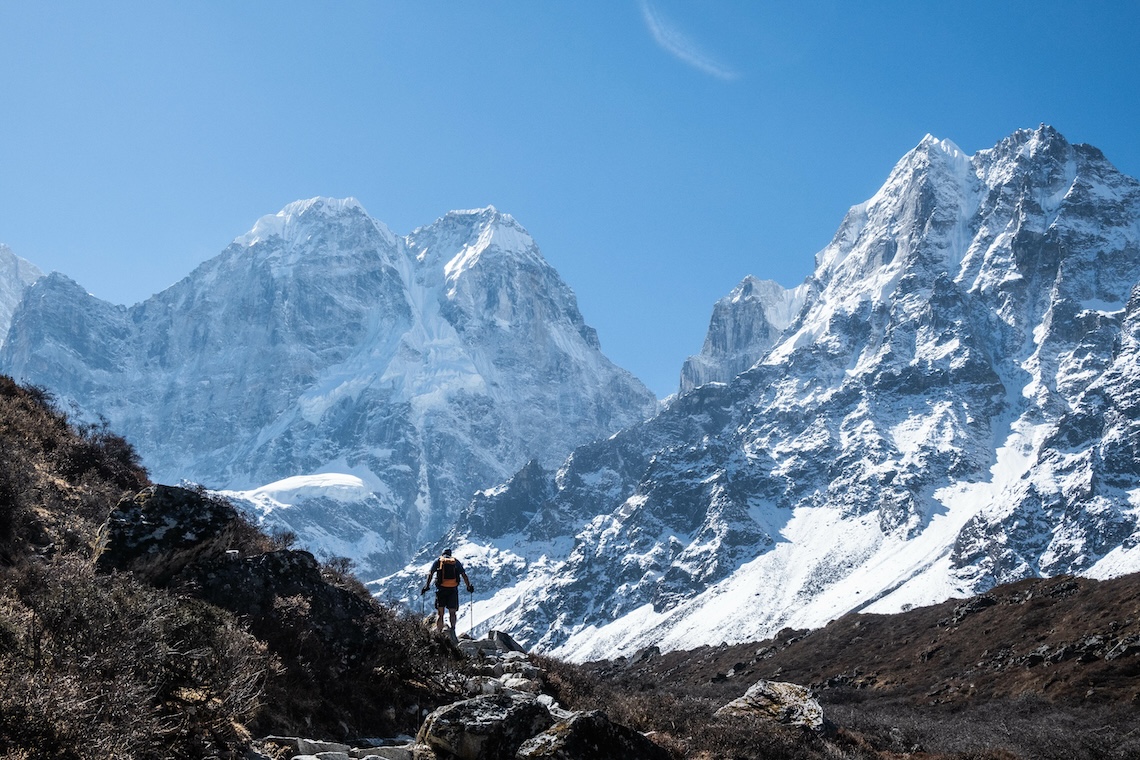
Tucked into the far east of Nepal, the Kangchenjunga region feels like a step back in time. It’s remote, untouched by mass tourism, and laced with ancient trade paths and high Himalayan passes. Trekkers come here not for the crowds or comforts, but for the wildness, the silence, and the sheer scale of the mountains.
This is where the Himalayas stretch their muscles. Kangchenjunga rises to 8,586m, just 263m shorter than Everest, making it the world’s third-highest mountain. Its north and south base camps offer staggering views of glaciers, fluted ridges, and towering neighbours.
The Kangchenjunga Base Camp Trek passes through deep forest, Buddhist villages, wind-swept passes and alpine valleys where blue sheep roam. It’s longer and tougher than most Nepal treks, but it’s also one of the most rewarding hikes in the world.
THE TREK
The route to Kangchenjunga’s north base camp is a true Himalayan journey. It begins with a flight to Taplejung, deep in the country’s far east, and winds through terraced hillsides, rhododendron forests, and remote valleys carved by glacial rivers. Early days pass through colourful villages with fluttering prayer flags and views of Jannu, one of the most beautiful peaks in the region.
After crossing the Mirgin La (4,664m) and Sinelapcha La (4,700m) passes, the trail enters the high country, following the Ghunsa Khola river north through pine forest and remote settlements. Eventually, you reach Pang Pema, the northern base camp at just over 5,100m. From here, Kangchenjunga’s immense north face comes into view, an arena of hanging glaciers and tumbling seracs. An optional hike to Drohmo Ri (5,800m) offers a rarely seen panoramic view of the entire massif.
This is a long and varied trek, typically completed over three weeks, with time built in for acclimatisation, exploration and rest. While not technical, it’s physically demanding and far less supported than routes near Everest or Annapurna, making it ideal for those craving space, solitude, and big mountain views.
HOW TO DO IT
Adventure Peaks offers a 28-day guided expedition to Kangchenjunga Base Camp, with private departures available. Their itinerary explores both sides of the mountain, north and south, and includes all permits, internal flights, local guides, and high-mountain logistics.
The route crosses a series of stunning passes, reaches Pang Pema and the Yalung Glacier, and includes the option to climb Drohmo
Everest Base Camp, Nepal
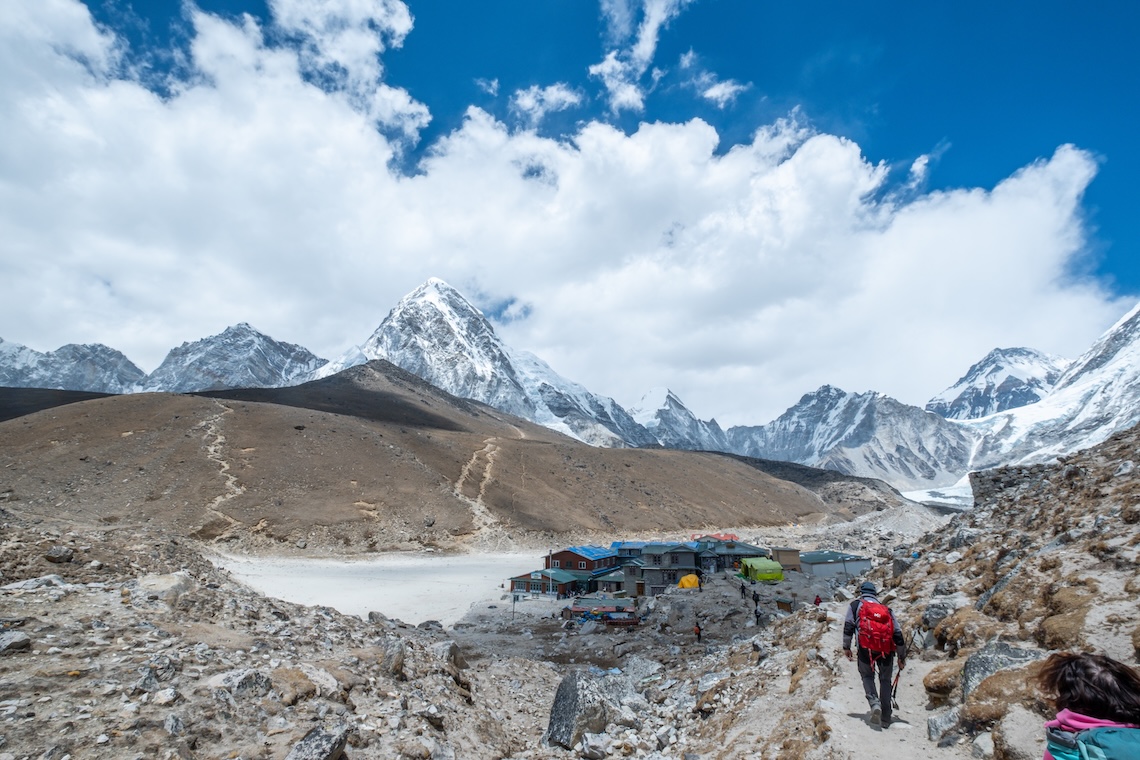
Everest Base Camp (EBC) is a landmark destination in every sense. Set at 5,364m in Nepal’s Khumbu region, the trek leads through a corridor of Himalayan giants and Sherpa culture to the base camp of the world’s highest mountain.
But what makes the journey so enduring is what you’ll encounter along the trail: prayer flag-strewn suspension bridges, morning light on the beautiful Ama Dablam, and the buzz of Namche Bazaar.
The view grows grander as you ascend from forested foothills around Lukla to glacial basins near Gorak Shep. Along the way, you’ll pass mani walls, hear monks chanting at dawn, and walk beneath some of the most iconic peaks on the planet. Everest might be the headline, but it’s the trail that leaves the mark.
THE TREK
Most EBC treks begin with a thrilling flight into Lukla, landing on a narrow airstrip carved into the mountainside. From there, the trail climbs steadily through the Khumbu Valley, weaving through Sherpa villages and high-altitude terrain.
The scenery shifts day by day, from pine forests and yak trails to glacial moraine and snow-dusted passes, offering constant reward for your efforts. Key stops include Namche Bazaar, the region’s bustling trade hub; Tengboche Monastery, perched beneath Ama Dablam; and Dingboche, with its wide views across Imja Valley.
The route continues through Lobuche and Gorak Shep before reaching Everest Base Camp itself. Here, in the shadow of the Khumbu Icefall, climbers prepare for their summit bids while trekkers soak up the energy of Everest’s lower flanks.
For a show-stopping finish, the early-morning ascent of Kala Patthar (5,545m), a nearby mountain on the south ridge of Pumori, delivers one of the finest viewpoints in the Himalayas.
The challenge isn’t technical. It’s about pacing, stamina, and adjusting to the altitude. Most trips run over 12-16 days, with acclimatisation built in at key stages.
HOW TO DO IT
For a guided experience that goes further, Tusker Trail offers a 19-day Everest Base Camp trek designed for high support and maximum impact.
Founded by legendary expedition leader Eddie Frank, Tusker’s EBC treks are led on the ground by expert Sherpa guides and supported by a mobile kitchen crew, small group sizes, and medically trained staff who prioritise acclimatisation and safety. Their route follows the traditional trail with smart pacing, cultural depth, and a final push to Kala Patthar for one of the Himalayas’ most iconic views.
For full details and departure dates, head over to Tusker Trail’s website here.