


Since time immemorial, humans have wandered the land. First in search of wooly mammoths to kill, and then to find greener pastures on which to live and farm. Eventually, trade routes developed as people realised a buck could be made by transporting certain goods to faraway places and exchanging them for things that made their food taste better or clothing more fashionable.
At some point, another form of travel developed as people sought meaning to their lives in the form of religion. Sometimes, they went to great effort in the pursuit of spiritual satisfaction, such as the committed and presumably very bored individuals who dragged immense blocks of stone from Wales to Wiltshire to stack them up and create Stonehenge – though that task may have been made easier with help from grey-skinned friends from the skies.
Less backbreaking religious wanderings began in the Christian kingdoms of Europe, as people travelled to holy sites at atone for sins and receive blessings. But the idea of pilgrimage wasn’t solely motivated by religion: it was a chance to explore the world, connect with nature, and meet other people outside of your normal existence.
That’s why pilgrimages have an appeal beyond the devout to this day, and that’s why England’s most ancient pilgrimage, the Pilgrims’ Way, is finding itself more popular than ever as people seek to tap into the universal human experience of slowing down, stepping back in time, and going for a nice long walk.
A journey through time
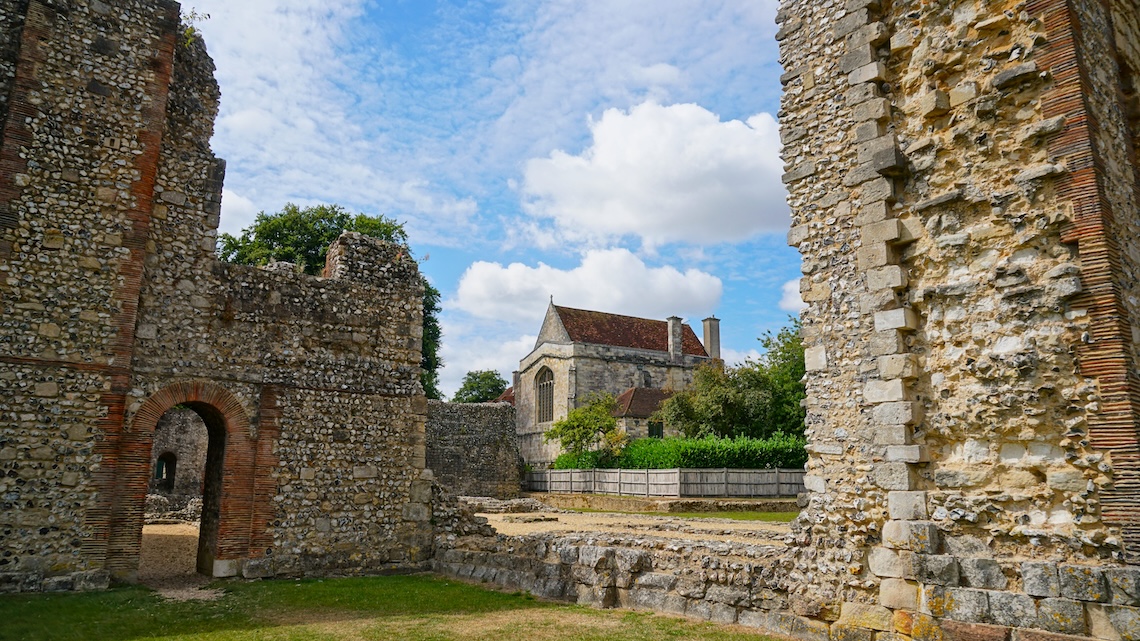
The Pilgrims’ Way connects two of the most holy sites in English Christendom: Winchester and Canterbury. Departing the ancient capital of Wessex, the route travels across chalk downs and through native woodland, rural villages, and orchards to arrive at the magnificent Canterbury Cathedral 144 miles later. It’s a quiet, contemplative, and relatively gentle low-level trail, but you can still expect some climbs offering splendid views across the rolling countryside.
There are plenty of interesting and historical places to discover along the way, from churches, shrines, and wells, to castles, timbered villages, and pubs. All of this makes it an excellent choice if you haven’t done a multi-day long distance hike before.
Walk the Pilgrims’ Way with Contours Holidays

If you’re interested in walking the Pilgrims’ Way, Contours Holidays organises self-guided tours which includes accommodation, breakfast, luggage transfers, maps, and itineraries, so you can relax and focus on enjoying the walk. They offer multiple tours depending on how much daily distance you want to cover, ranging from a challenging nine-day version to a more relaxed 16-day walk, so you can choose the one that’s right for you.
In the same area, Contours also organises self-guided walks along St Swithun’s Way and the North Downs Way with multiple options again for each. With 30 years of experience providing unforgettable walking adventures across the UK, 2026 is the perfect time to book a walking holiday with Contours.